

MagicFix: The innovative mounting system with click function
With the MagicFix support rail, OBO is presenting a new product portfolio to complement the existing OBO mounting systems. It has been designed especially for efficient, quick installation in response to high time pressure and low staffing levels.
A wide range of mounting and suspension options
MagicFix is particularly suitable for lightweight OBO installation systems such as GR-Magic, RKS-Magic and LG 60. With its multifunctional design, and its construction as a reversible profile, the support rail offers various options for fastening and suspending mesh cable trays, cable trays and cable ladders. Compared to conventional suspensions with threaded rods, the system, in conjunction with special suspension strips, enables almost screw- and tool-free fastening – including a patented clamp holder specially for the GR-Magic. The mesh cable tray is simply snapped into the support rail, which means that no additional mounting material is required.
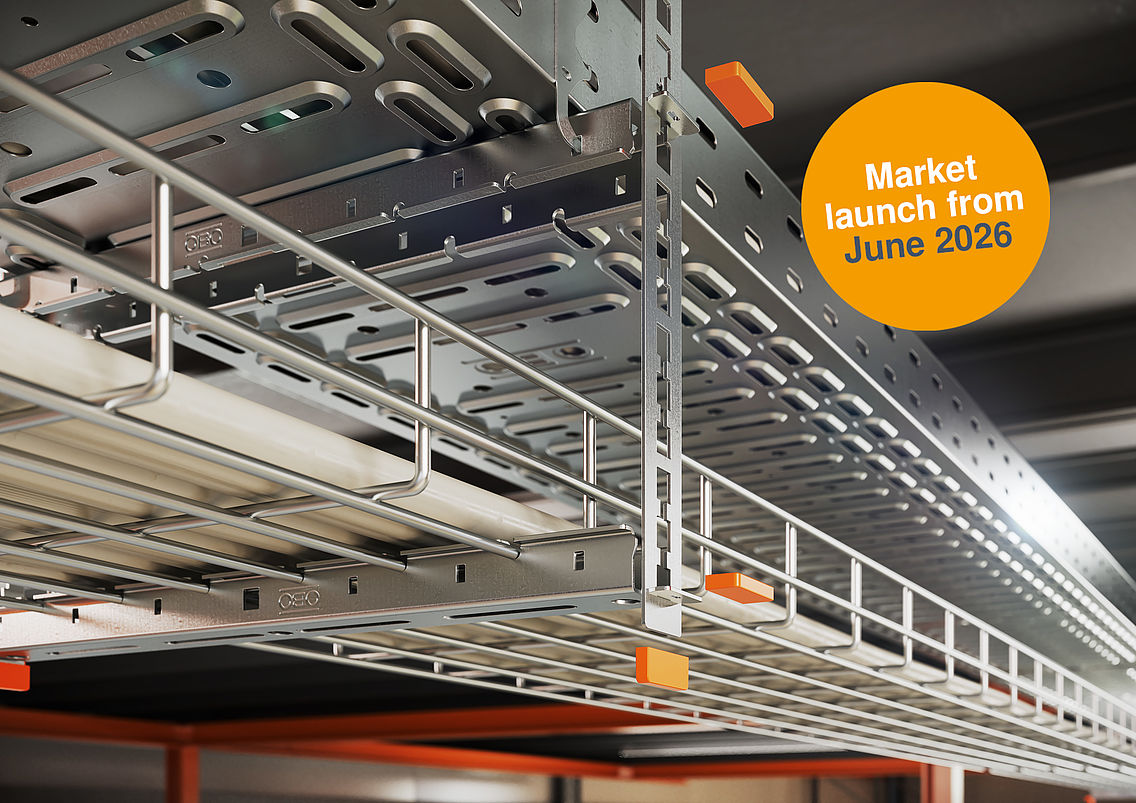
The MagicFix portfolio components
- MagicFix support rail ‒ for the laying of lighter cable tray systems with patented Magic fastener for screw- and tool-free mounting of mesh cable tray systems
- MagicFix suspension strips ‒ for the modular ceiling mounting with integrated recesses for a screw- and tool-free installation as well as flexible height adjustment
- MagicFix quick fastener ‒ for screw- and tool-free laying of cable trays and cable ladders onto the MagicFix support rail
- MagicFix protective cap ‒ for the protection against sharp edges, compatible with the fastening tabs of the MagicFix support rail as well as with the ends of the MagicFix suspension strips
Tool-free or classic screw connection possible
As an additional safety measure for the mesh cable tray and to secure cable trays and ladders to the support rail, a special quick fastener can be used. This quick fastener is hooked into the support rail and can be bent over the cable tray or ladder rail by hand without the need for tools, or with pliers. Alternatively, the classic screw connection is also possible, as integrated slots in the support rail allow conventional fastening of cable trays and cable ladders.
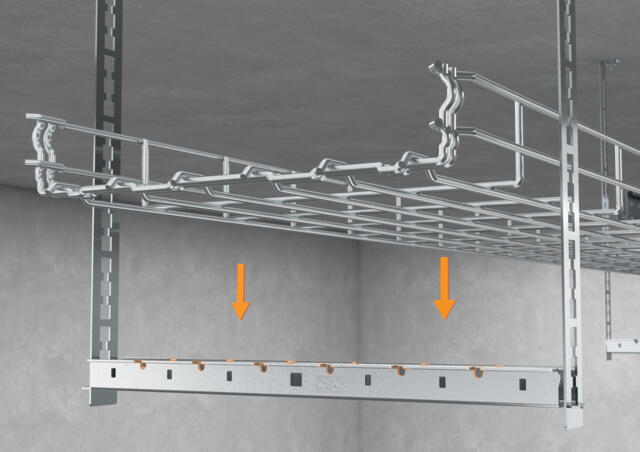
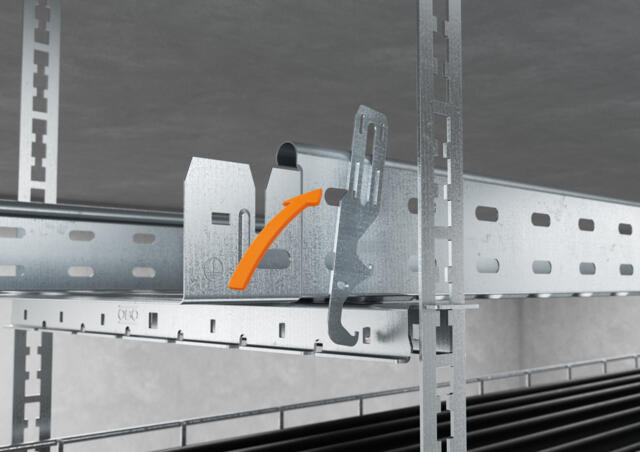
MagicFix suspension strip for modular ceiling mounting
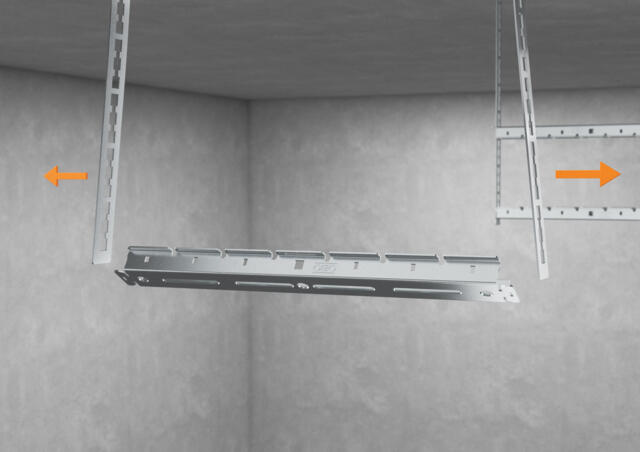
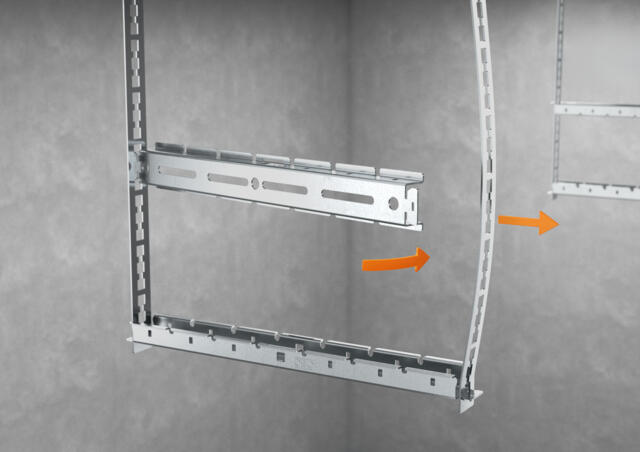
The MagicFix support rail is mounted using suspension strips. These are fixed to the ceiling using a suitable fastening system. The support rail is available in lengths of 500 mm, 1,000 mm, 1,500 mm and 2,000 mm. The selection of anchors and fasteners depends on the existing substrate and the expected load values. Simply inserted into the suspension strips, the support rail is quickly mounted and can be adjusted in height without tools. The suspended support rail can optionally be secured by bending the hooked fastening tabs in the suspension strips. Alternatively, the protective cap, which is compatible with both the fastening tabs and the ends of the suspension strips, can be attached directly. Due to the recesses in the suspension strips for different height settings, multilayer installations are also possible without having to remove pre-assembled rungs.
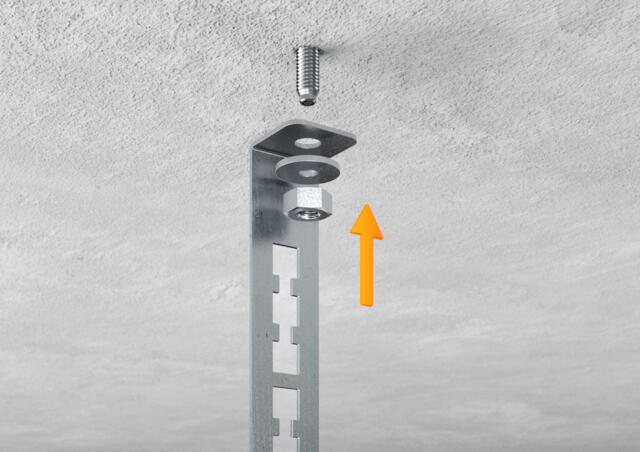
Fewer mounting parts, high flexibility
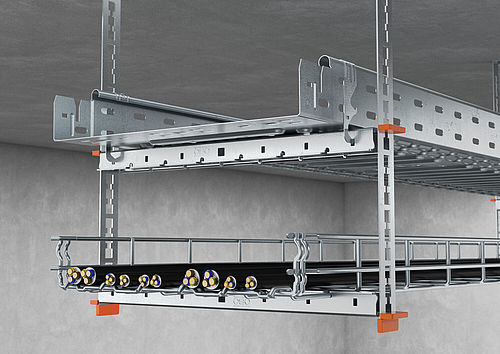
As a whole, the portfolio is characterised by a reduced number of installation components, as fewer individual parts are required compared to conventional solutions. This eliminates the need, for example, for screws, nuts and washers and the corresponding tools. This saves up to 70 % in time compared to conventional, screwed pendulum suspensions.
Thanks to the multifunctional design of the MagicFix support rail, the suspension can be installed both conventionally with threaded rods or modularly using suspension strips. Both variants can be used to create various pendulum and centre suspensions as well as single-layer and multi-layer installations. In addition, the MagicFix support rail is also suitable for spaced mounting of mesh cable trays and cable trays on the floor. This high degree of flexibility combines the advantages of modern, modular and time-saving mounting systems with the proven safety and load-bearing capacity of traditional screw connection techniques.