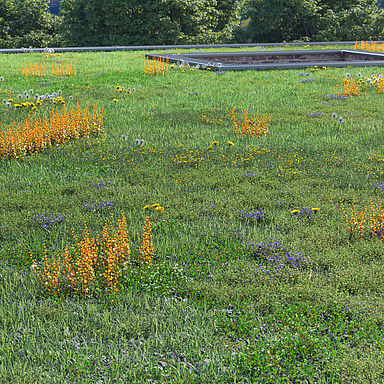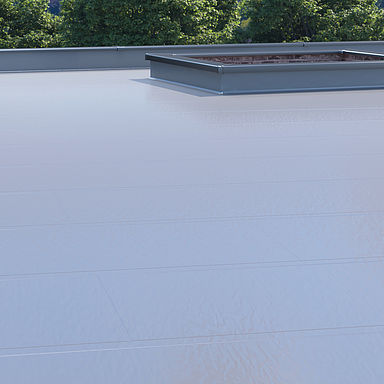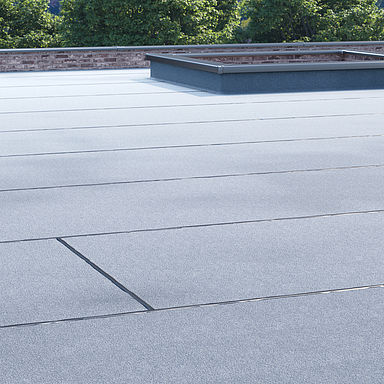

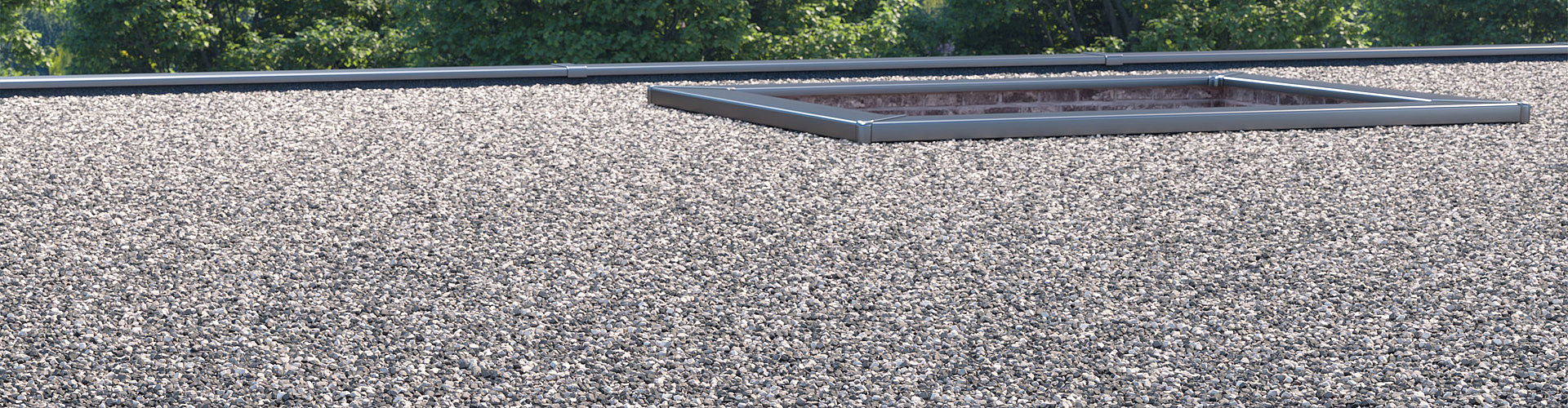
Gravel roofs are very common, both on older buildings and modern flat roof constructions. The gravel layer protects the seal below from UV rays, temperature variations and mechanical loads. At the same time, it performs important functions in fire protection and thermal buffering.
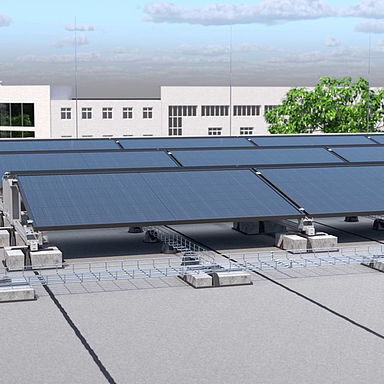
When installing photovoltaic systems on gravel roofs, the bulk material plays a key role: It can be used as a natural ballast material and also helps stabilise the sub-construction – without increasing the load or penetrating the roof skin.
Do you have any questions on this topic? We’ll be happy to help.
Schnelleinstieg


Advantages at a glance:
- Fire resistance included
From a gravel layer of approx. 5 cm, the roof is considered “hard roofing” – resistant to flying sparks and thermal radiation. This increases the safety of the PV system and can also present an advantage in terms of approvals. - No penetration necessary
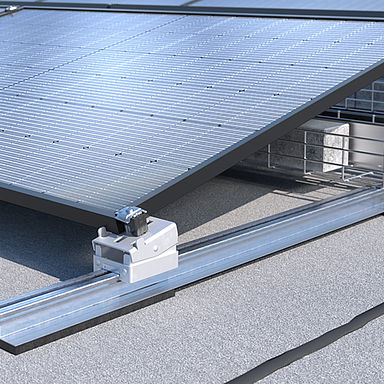
Our mounting systems for gravel roofs are designed for completely non-penetration installation – with non-slip components that can be fixed directly in the gravel bed.
- Uniform load distribution
The gravel layer acts as a buffer layer and distributes pressure loads evenly, protecting the roof seal and ensuring a secure hold.
Harness the strength of gravel for your photovoltaic solution
The potential of gravel roofs is often underestimated. Combined with appropriate mounting systems, they provide a stable base for sustainable energy generation – permanent, safe and structurally sound.
Our systems use what’s available – and transform protective material into a strong foundation for PV solutions.