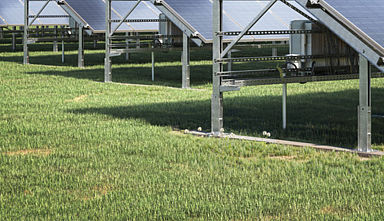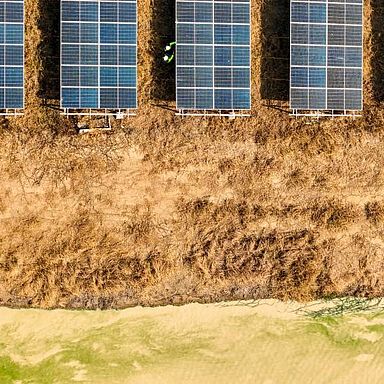

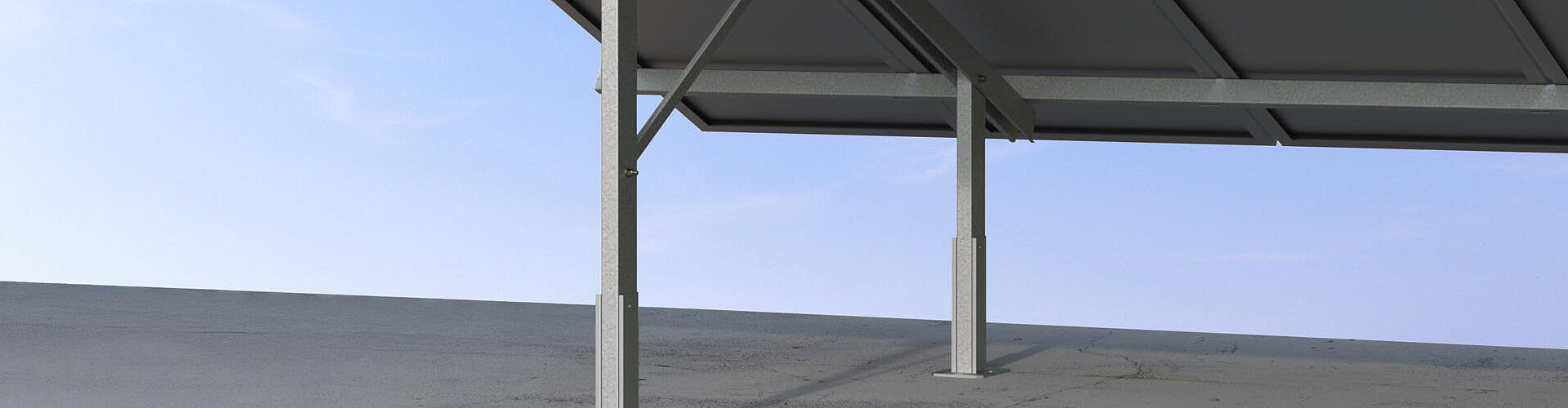
Concrete and tarmac surfaces – such as industrial areas, former traffic areas or car parks – are the ideal foundation for free-standing photovoltaic systems thanks to their even structure and high load-bearing capacity. At the same time, they place particular requirements on mounting: As the substrate is usually sealed, classic anchoring methods such as ram foundations cannot be used.
Our systems rely on mechanically fastened constructions that can be adapted flexibly to the circumstances – without any extensive earthworks. This makes long-lasting, stable and standard-compliant PV installation possible on sealed surfaces.
Do you have any questions on this topic? We’ll be happy to help.
Quick start


Advantages at a glance:
- Non-penetrative or anchored mounting
Our systems can be placed directly on the surface or securely screwed without extensive foundation work – ideal for sealed surfaces. - High substrate load-bearing capacity
Concrete and tarmac provide the optimal load-bearing conditions for the PV subconstruction – even with larger module fields or in areas with strong winds.
- Short installation times
As neither earthworks nor concrete foundations are required, mounting can be achieved quickly, no matter the weather. - Suitable for temporary use
Ideal for interim solutions on industrial areas or car parks – with removable mobile systems.
Good to know:
According to industry studies, sealed surfaces offer an until now untapped potential of multiple gigawatts of installable PV performance – especially in urban and industrial areas. With the appropriate systems, these areas can be utilised efficiently and economically.